

Printed fabrics are a popular choice for a wide range of applications, from clothing to home decor. However, one common issue that many people face is fabric wrinkling. As a print fabric supplier, I understand the importance of providing high - quality fabrics that maintain their appearance. In this blog, I'll share some effective strategies on how to prevent print fabric from wrinkling.
Choose the Right Fabric Type
The first step in preventing wrinkling is to select the appropriate fabric. Different fabric types have varying levels of wrinkle resistance.
Heavy Twill Printed Fabric: Heavy twill fabrics are known for their durability and relatively low tendency to wrinkle. The tight weave of twill fabrics provides a more structured appearance and better resistance to creasing. For instance, Heavy Twill Printed Fabric is a great option for items that need to hold their shape, such as jackets or upholstery. The heavier weight and dense construction make it less likely to wrinkle easily compared to lighter, more loosely woven fabrics.
Cotton Jacquard Print Fabric: Cotton jacquard fabrics offer a good balance between style and practicality. While cotton itself can wrinkle, jacquard weaves often add a bit more stability. Cotton Jacquard Print Fabric has an intricate pattern that can help the fabric maintain its form. The interlacing threads in the jacquard weave create a stronger structure, reducing the likelihood of deep wrinkles.
New Style Shirt Print Fabric: When it comes to shirt fabrics, a blend of natural and synthetic fibers can be a game - changer. New Style Shirt Print Fabric that combines cotton with polyester or other synthetic materials often has improved wrinkle resistance. Polyester, for example, is a synthetic fiber that is known for its smoothness and ability to resist wrinkles. A fabric blend can take advantage of the breathability of cotton and the wrinkle - resistant properties of polyester.
Proper Storage
How you store your print fabric can significantly impact its wrinkling.
Folding Techniques: When folding fabric, use large, smooth folds rather than sharp creases. Sharp creases are more likely to turn into permanent wrinkles. For long - term storage, try to fold the fabric at the same points each time. This helps to distribute the stress evenly across the fabric and reduces the formation of deep wrinkles. If possible, use a folding board or a flat surface to ensure straight and even folds.

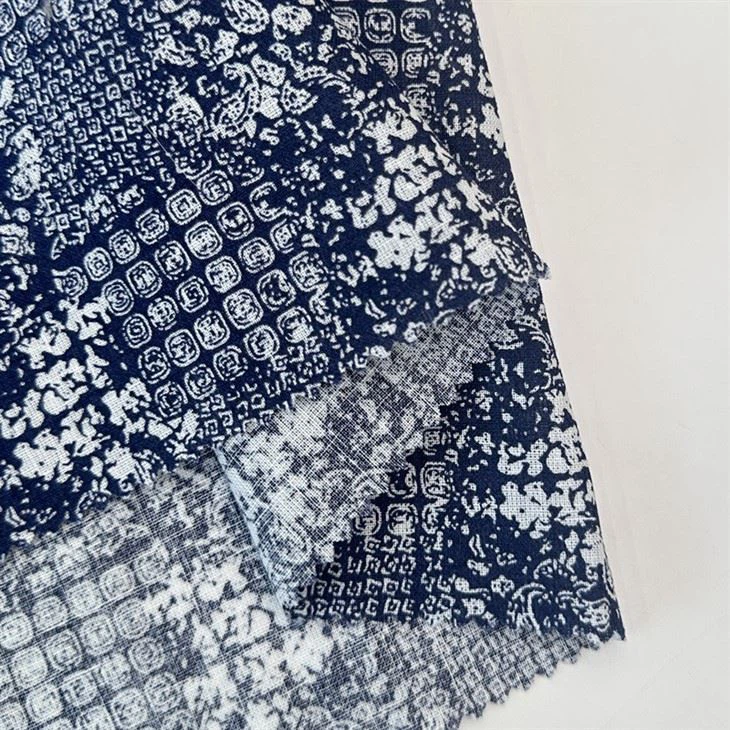
Hanging Options: Some fabrics are better suited for hanging. For example, lightweight print fabrics used for curtains or dresses can be hung on padded hangers. Padded hangers prevent the fabric from being pinched or creased at the hanger points. Make sure to hang the fabric in a way that allows it to fall naturally. Avoid overcrowding the hanging space, as this can cause the fabric to bunch up and wrinkle.
Handling and Care During Use
The way you handle and care for the fabric during its use also plays a crucial role in preventing wrinkles.
Avoid Over - Stretching: When wearing or using print fabric items, be careful not to stretch the fabric too much. Over - stretching can disrupt the fabric's structure and lead to wrinkles. For example, when putting on a printed shirt, pull it gently over your head instead of tugging it forcefully. This helps to maintain the fabric's original shape and reduces the risk of wrinkling.
Regular Ironing or Steaming: Regular maintenance is key. Ironing or steaming the fabric can help to remove existing wrinkles and prevent new ones from forming. When ironing, use the appropriate temperature setting for the fabric type. For cotton fabrics, a medium - high heat may be suitable, while synthetic fabrics often require a lower temperature to avoid damage. Steaming is a gentler option, especially for delicate print fabrics. A handheld steamer can be used to quickly smooth out wrinkles without direct contact with the fabric.
Pre - Treatment and Finishing
Fabric pre - treatment and finishing processes can enhance its wrinkle - resistant properties.
Wrinkle - Resistant Finishes: Many modern print fabrics are treated with wrinkle - resistant finishes during the manufacturing process. These finishes can be chemical or mechanical. Chemical finishes often involve applying substances that cross - link the fabric fibers, making them more resistant to wrinkling. Mechanical finishes, on the other hand, may involve processes like calendering, which smooths the fabric surface and improves its resistance to creasing.
Pre - Shrinkage: Pre - shrinking the fabric before using it can also help prevent wrinkles. When fabric shrinks unevenly during washing, it can cause wrinkles. By pre - shrinking the fabric, you ensure that any potential shrinkage occurs before the fabric is made into a finished product. This can be done by washing and drying the fabric according to the manufacturer's instructions before cutting and sewing.
Environmental Factors
The environment in which the fabric is stored and used can affect its wrinkling.
Humidity Control: High humidity can cause fabric to absorb moisture, which can lead to wrinkling. On the other hand, very low humidity can make the fabric dry and brittle, also increasing the likelihood of wrinkles. Try to store and use the fabric in an environment with moderate humidity. You can use a dehumidifier or a humidifier to control the humidity levels in your home or storage area.
Temperature Management: Extreme temperatures can also impact the fabric's structure. Avoid exposing print fabric to very hot or cold environments for extended periods. For example, don't leave a printed garment in a hot car for a long time, as the heat can cause the fabric to warp and wrinkle.
In conclusion, preventing print fabric from wrinkling requires a combination of choosing the right fabric, proper storage, careful handling, appropriate pre - treatment, and control of environmental factors. As a print fabric supplier, I am committed to providing high - quality fabrics with excellent wrinkle - resistant properties. If you are interested in purchasing our print fabrics or have any questions about preventing fabric wrinkling, I encourage you to reach out to me for further discussion and to start a procurement negotiation.
References
- Textile Science and Technology: Fabric Structure and Properties.
- The Handbook of Fabric Care and Maintenance.
- Modern Textile Manufacturing Processes and Finishes.