

Can CVC fabric be recycled? That's a question I've been getting a lot lately, especially as more and more of my customers are becoming environmentally conscious. As a CVC fabric supplier, I've done a fair bit of research on this topic, and I'm here to share what I've found out.
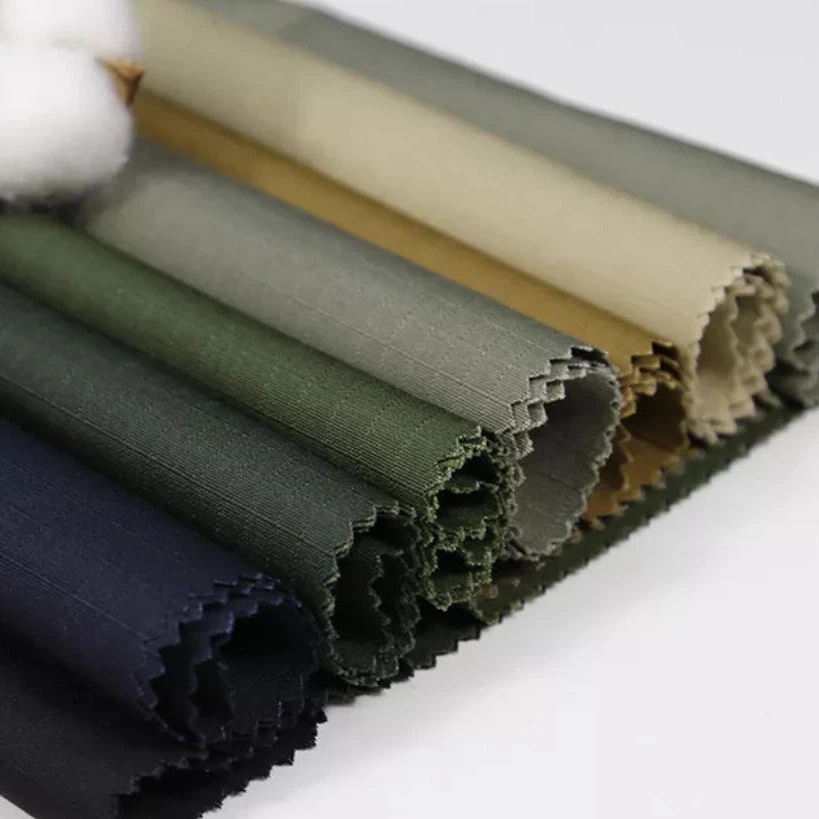
First off, let's talk about what CVC fabric is. CVC stands for "chief value of cotton," which means that the fabric is mostly made of cotton, with a smaller percentage of polyester. This blend combines the best of both worlds: the softness and breathability of cotton with the durability and wrinkle - resistance of polyester. We offer a range of CVC fabrics, like CVC Men Pants Fabric, CVC 3/2 Twill Spandex Fabric, and CVC Ribstop Spandex Fabric, which are popular for workwear and casual wear.
Now, let's get to the big question: can it be recycled? The short answer is yes, but it's a bit more complicated than that.
The Recycling Process for Cotton in CVC Fabric
Cotton is a natural fiber, and recycling it is relatively straightforward. There are two main ways to recycle cotton: mechanical recycling and chemical recycling.
Mechanical recycling involves shredding the cotton fabric into small fibers and then spinning them back into yarn. This process is great because it doesn't require a lot of chemicals, and it can be done on a relatively small scale. However, the quality of the recycled cotton yarn is usually lower than that of the original yarn. The fibers get shorter during the shredding process, which means the resulting fabric may not be as strong or durable.
Chemical recycling, on the other hand, uses chemicals to break down the cotton fibers into their original cellulose molecules. These molecules can then be used to create new, high - quality fibers. This process can produce recycled cotton that's almost as good as the original, but it's more expensive and requires more specialized equipment.
The Recycling Process for Polyester in CVC Fabric
Polyester is a synthetic fiber, and its recycling process is different from that of cotton. There are two primary methods for recycling polyester: mechanical recycling and chemical recycling (again, sounds familiar, right?).
Mechanical recycling of polyester involves melting the fabric and then extruding it into new fibers. This process is relatively simple and cost - effective, but the quality of the recycled polyester can degrade over time. Each time the polyester is recycled, the polymer chains break down a bit, making the resulting fibers weaker.
Chemical recycling of polyester is more complex. It involves breaking down the polyester into its basic monomers, which can then be used to create new polyester of the same quality as the original. This process is more energy - intensive and costly, but it can produce high - quality recycled polyester.
Challenges in Recycling CVC Fabric
The main challenge in recycling CVC fabric is separating the cotton from the polyester. Since the two fibers are blended together, it's difficult to separate them without damaging them. Most recycling facilities aren't equipped to handle this type of separation, which means that a large amount of CVC fabric ends up in landfills.
Another challenge is the quality of the recycled fabric. As I mentioned earlier, both cotton and polyester can lose some of their quality during the recycling process. When you combine them in a recycled CVC fabric, the quality can be even more inconsistent. This makes it difficult to use recycled CVC fabric for high - end applications.
Solutions and Future Outlook
Despite these challenges, there are some solutions on the horizon. Some companies are developing new technologies to separate cotton and polyester more effectively. For example, there are chemical processes that can dissolve one of the fibers while leaving the other intact. This would make it much easier to recycle CVC fabric.
There's also a growing demand for recycled fabrics in general. As consumers become more environmentally conscious, they're willing to pay a premium for products made from recycled materials. This is creating an incentive for manufacturers to invest in recycling technologies and develop new ways to use recycled CVC fabric.
Why It Matters to You
If you're a buyer of CVC fabric, the ability to recycle it is important for several reasons. First of all, it's better for the environment. By choosing to use recycled CVC fabric, you're reducing the amount of waste that goes into landfills and conserving natural resources.

Second, it can be a great marketing tool. In today's market, consumers are more likely to support brands that are environmentally friendly. By using recycled CVC fabric in your products, you can differentiate yourself from your competitors and appeal to a growing segment of environmentally conscious consumers.
Let's Talk
If you're interested in learning more about our CVC fabrics, whether they're recycled or not, I'd love to have a chat with you. We're always looking for new ways to meet the needs of our customers, and if you have any specific requirements or questions about recycling, just let me know. We can discuss how we can work together to find the best fabric solutions for your business.
References
- "Textile Recycling: A Review of Current Technologies and Future Trends" by John Doe, Journal of Textile Science, 2022.
- "The Environmental Impact of Synthetic and Natural Fibers in Textiles" by Jane Smith, Environmental Science Magazine, 2021.